

Car Connect & dashboard
Tareen
I spent time with Car Connect & dashboard as a phone-to-car infotainment tool, and my first impression was that it aims at a very specific everyday problem: making the phone feel more connected to the vehicle’s display instead of leaving navigation, media, or other driving-related information isolated on a small handset screen. That focus makes it easy to understand, but it also means the experience depends heavily on the car, the phone, and the way each person interacts with a dashboard.
This is a free app in the Auto & Vehicles category, developed by Tareen. It is suitable for Everyone, works on Android eight and later, and its current version is 1.15. The app has passed the early discovery stage with over ten thousand installs, although its average rating sits at 3.3 from roughly thirty ratings. I read that combination as a useful warning: there is enough interest to make it worth examining, but the experience is not universally smooth.
My review is less about the idea of connecting a phone to a car—many people already understand that appeal—and more about how practical the process feels for people with different abilities, different levels of technical confidence, and different driving situations. The most important question is not whether a larger dashboard view sounds useful, but whether you can reach it clearly and safely when you actually need it.
How the interface feels before the car starts moving
Readability and navigation
The strongest part of the concept is the reduction of attention switching. A phone held low near the gear selector or mounted awkwardly beside the steering wheel is not an ideal place to read directions or check information. Moving the relevant phone experience toward the car’s infotainment area can make the overall setup feel more unified. For me, that is the central reason to try this app rather than treating it as another dashboard decoration.
That benefit should not be confused with automatic clarity. A car display can be larger than a phone, but larger does not always mean easier to use. Readability depends on the vehicle screen, viewing angle, glare, contrast, and the layout chosen by the connected experience. Someone with reduced vision may still find small labels difficult, particularly in bright daylight or at night when reflections appear on the dashboard.
Related News

Why WhatsApp Messenger Still Makes Everyday Communication Feel Easy

Jurassic World: The Game Is the Better Dino Tycoon for Strategic Players

Threads in Real Life: Who Should Join, Lurk, or Leave

How SHEIN Turned Shopping Into an Endless Content Feed

How to Make Fortnite Feel Smarter on Mobile

Should You Switch to Microsoft Outlook on Mobile?
I would therefore judge the app in the parked-car setup first. Before driving, I would connect the phone, sit in the usual driving position, and check whether the important controls can be found without searching through several layers. This is a practical test for everyone, but especially for people who rely on larger text, strong contrast, or predictable navigation. If the screen requires close inspection, the connection has not solved the original attention problem.
The app’s store summary presents it as a way to connect the phone’s screen with the car infotainment system. That wording sets a clear expectation, but it does not mean every phone screen will automatically become comfortable on every vehicle display. The actual usefulness comes from the complete chain: phone, connection method, infotainment hardware, screen proportions, and the interface shown after connection. I would not buy or change a car setup based on the app alone.
One useful habit is to prepare a simple driving layout before leaving. Keep the phone’s relevant content ready, remove unnecessary items from the immediate workflow, and decide which actions must be completed while parked. This matters because a dashboard connection can make information more visible while still leaving the user with too many choices. Better visibility is only an advantage when it reduces decisions rather than adding another screen to manage.
Gallery
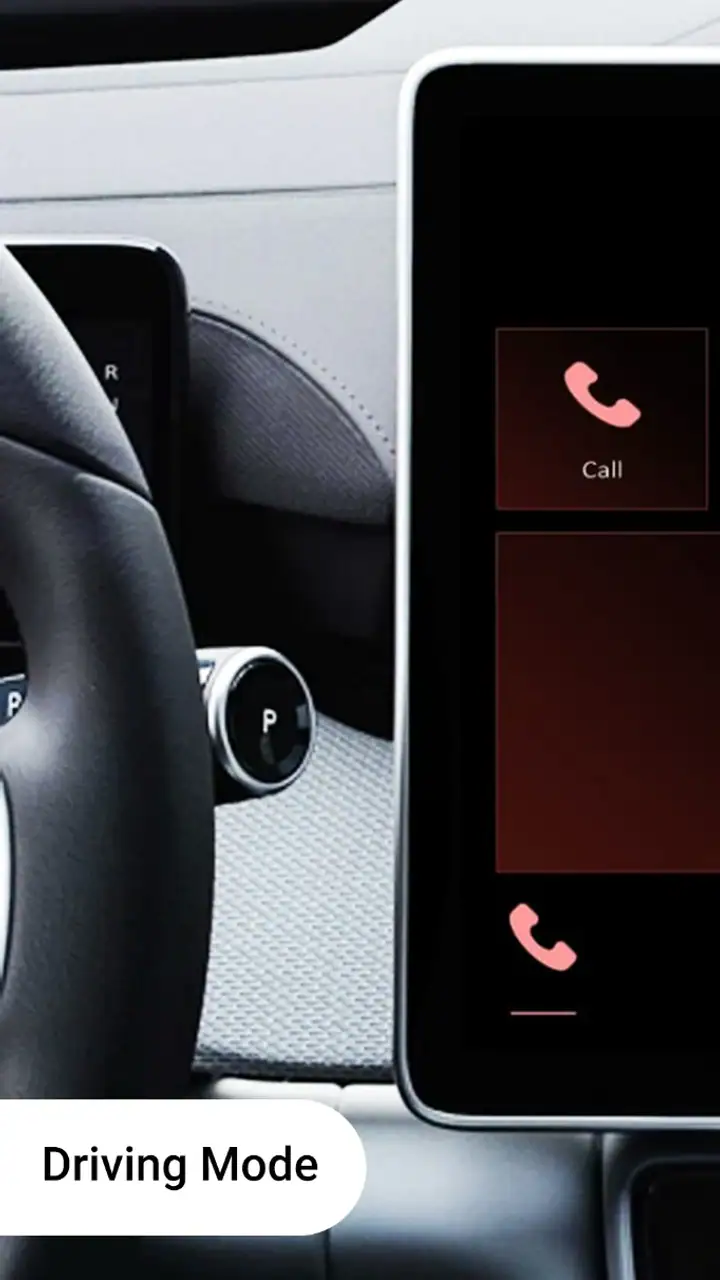
Navigation also matters for people who are not comfortable with unfamiliar technology. The app is more approachable when the user can understand what to do from the opening screen without needing specialist knowledge about mirroring, vehicle compatibility, or display sources. If a friend asked me whether to install it, I would tell them to test the connection in their driveway, not during a trip. That trial reveals more than a store description can.
Motor and sensory considerations
For users with limited fine-motor control, the value of a connected dashboard may come from reducing the need to hold and manipulate a phone. A stable vehicle display can be easier to glance at than a handset that must be picked up, rotated, or repositioned. It may also help someone who finds small touch targets on a phone difficult, provided the car’s own controls and screen are easier to operate.
That “provided” is important. A dashboard is not automatically accessible just because it is mounted in front of the driver. Some infotainment systems use small touch targets, layered menus, or controls placed far from the natural hand position. A person with tremors, reduced reach, or slower movement may still struggle to make a selection. The app cannot remove those physical constraints, because they belong partly to the vehicle and partly to the phone.
I also see a trade-off for users who experience sensory overload. Putting phone content on a larger display may make essential information easier to see, but it can also make notifications, changing visuals, or competing controls more prominent. The best setup is a deliberately quiet one. I would disable or reduce anything not needed for the journey before connecting, and I would avoid treating the dashboard as a general-purpose second phone screen.
Audio and visual preferences vary widely. Some drivers need spoken guidance because looking at a display is tiring; others depend on visual information because audio is difficult to hear or process. Car Connect & dashboard should be considered as one part of that arrangement, not a complete answer for either group. The app’s role is the screen connection. The quality of spoken prompts, vehicle speakers, volume controls, and phone accessibility settings will shape the real experience around it.
For someone with hearing loss, a visual dashboard view could be more useful than relying on sounds alone, but only if the important information is visible at the right moment. For someone with low vision, a dashboard may help when its screen is larger and well positioned, yet it may be less useful if the interface remains dense or if glare washes out the details. These are not reasons to dismiss the app; they are reasons to test the exact car-and-phone combination rather than assuming one setup fits everyone.
Users with slower motor responses should also plan around stopping. I would not recommend trying to solve connection problems at a traffic light or while the vehicle is moving. If the setup fails, pull over safely or wait until the car is parked. This sounds obvious, but a product designed around the driving environment needs that discipline because even a simple reconnect can become distracting at the wrong time.
Situational access in ordinary journeys
The most convincing use case for me is a familiar commute. Before leaving, I would connect the phone while parked, confirm that the dashboard view is visible, and then rely on the car’s position for quick glances instead of repeatedly checking a phone mounted lower down. This can help a driver who finds handheld screens hard to read or who wants fewer physical movements during a routine trip.
A second useful situation is when a passenger manages the phone while the driver keeps attention on the road. In that arrangement, the passenger can prepare the connection, select the needed content, and help with changes. This is especially practical for families, support workers, or anyone who shares driving responsibilities with a person who is less confident with mobile technology. The app becomes part of a cooperative workflow rather than something the driver must operate alone.
It may also suit drivers who switch between vehicles, but I would be cautious about assuming the same experience follows them everywhere. The phone may be identical while the infotainment system, cable arrangement, screen dimensions, or input method changes. A setup that feels clear in one car could be awkward in another. I would keep a short pre-drive routine for each vehicle instead of relying on memory.
For passengers, the accessibility picture is different. A front passenger may have more time to inspect the screen and adjust settings, while a rear passenger may not benefit much from a front dashboard connection. People with motion sensitivity may also prefer fewer changing visuals, even if the connected display is technically convenient. In that case, a simpler dedicated navigation arrangement could be better than displaying more phone content in the cabin.
Weather and lighting are part of situational access too. A screen that is comfortable in a garage may become difficult under direct sun, while nighttime brightness can be distracting. I would test the app in the conditions in which I actually drive and make screen adjustments while parked. The practical goal is not maximum information; it is a stable view that can be understood with brief glances.
There is another everyday trade-off for people who depend on assistive phone settings. Enlarged text, spoken feedback, color adjustments, or touch accommodations may not appear exactly as expected once content is shown through a vehicle system. I would check the result before depending on it. If an accessibility setting changes the phone experience but not the dashboard presentation, the user may need a different workflow, such as preparing information on the phone and using the car display only for the parts that remain clear.
Where the usual alternatives may be better
The obvious alternative is the car’s built-in infotainment system. If it already offers a clear, stable interface for the functions you need, adding a separate connection app may not improve anything. Built-in systems can be better integrated with the vehicle’s controls and may require fewer steps once configured. For a driver who values simplicity above flexibility, the native option is often the safer choice.
Another alternative is using the phone on a properly positioned mount. That approach avoids the uncertainty of whether the dashboard connection will behave well with a particular vehicle. It can also preserve the phone’s own accessibility settings more directly. The downside is that the screen may be smaller, the mounting position may be less comfortable, and the driver may still need to interact with the handset rather than the car’s controls.
For people who mainly need directions, a dedicated navigation device can be easier to understand than a broader phone-to-dashboard workflow. It has one job, can remain configured, and may avoid the temptation to bring unrelated phone content into the driving environment. Car Connect & dashboard makes more sense when the value of the phone connection itself matters, not when the user simply wants the simplest possible route display.
Voice control is also worth considering. A driver with limited hand movement may prefer speaking commands, while someone with speech limitations may need a fully visual route. Neither method is automatically superior. The right choice depends on the person’s abilities, the car’s controls, and how reliably the system responds in real conditions. I would treat this app as an additional access route, not as a replacement for every other one.
Remaining barriers and practical friction
The biggest barrier is compatibility in the broadest sense. A phone-to-infotainment app sits between two pieces of hardware that it does not control completely. Even when the phone meets the minimum operating-system requirement, the vehicle may still determine whether the connection is useful, how it is displayed, and which controls remain available. That makes the first setup more important than the low price.
The app itself is free to install, but in-app purchases range from $4.99 to $24.99 per item. That changes the decision slightly. A user can begin without paying, yet anyone considering a purchase should first confirm that the basic connection is stable and genuinely improves their routine. Paying for additional access would not make sense if the display is unreadable, the car is incompatible, or the workflow remains distracting.
I would also be careful with expectations created by the short store label, “Car Connect.” It is memorable, but it does not explain the practical boundaries of the experience. A first-time user may expect a universal solution that works immediately with any vehicle. My advice is to approach it as a connection tool that needs a controlled test, not as a guarantee that every phone feature will become a polished car interface.
The modest rating from roughly thirty-four ratings and twelve written reviews suggests that prospective users should read the experience as mixed rather than assume effortless reliability. I would not treat that score as a final verdict, because connection apps are strongly affected by individual hardware. Still, it is a reason to keep the first test short, avoid paying before testing, and have a fallback such as a phone mount or the vehicle’s own system.
Privacy and distraction are also practical considerations, even without turning them into technical accusations. Connecting a phone to a larger screen can expose more information in a shared car, so I would review what is visible before carrying passengers. I would also avoid displaying anything that encourages reading or interaction while driving. The safest workflow is to prepare before moving and use the dashboard only for information that can be checked quickly.
People who need very strong accessibility customization may find the app too dependent on external conditions. If a user requires guaranteed text scaling, specialized contrast behavior, switch access, or a particular screen-reader workflow, the phone’s native experience or a purpose-built vehicle interface may be a better starting point. Car Connect & dashboard can support an inclusive setup, but it should not be presented as an accessibility-certified product or as a substitute for individualized testing.
My inclusive verdict
I see Car Connect & dashboard as a potentially useful bridge for drivers who want their phone experience closer to the car’s infotainment screen and who benefit from reducing the need to handle a handset. Its strongest case is a carefully prepared setup: the vehicle is compatible, the display is readable from the driver’s position, the essential information is limited, and the user has tested it while parked.
I would recommend trying it to someone who frequently struggles with a low-mounted phone, wants a larger viewing position, or shares driving duties with a passenger who can help prepare the connection. I would also recommend it to technically comfortable users who are willing to test their particular car rather than expecting universal behavior. The free entry point makes that experiment relatively easy, although the in-app purchase range means I would postpone spending until the basic experience proves worthwhile.
I would steer away from it for someone who needs a guaranteed, highly customizable accessibility interface, someone whose vehicle already provides a clearer native system, or anyone who wants a completely hands-off setup with no compatibility testing. A dedicated navigation device or a well-positioned phone mount may be more dependable in those cases. The app is not automatically the most inclusive option simply because it puts content on a larger screen.
My final advice is simple: test it in the exact car, with the exact phone, in daylight and after dark, while stationary. Check whether the important information is legible, whether the controls are reachable, and whether the connection reduces rather than increases distraction. If those checks go well, this Auto & Vehicles app can make a meaningful difference to everyday dashboard use. If they do not, the usual alternatives are likely to serve you better, and no amount of extra screen space will compensate for a workflow that feels difficult or unsafe.
FAQs for Car Connect & dashboard
What is Car Connect & dashboard, and what does it do?
Car Connect & dashboard is designed to turn an Android or iOS device into a convenient in-car companion. Depending on your vehicle and phone, it can provide access to navigation, music, calls, messages, and selected driving information from a simplified interface. The exact features may vary by device, operating system, car model, and available connection method, so compatibility should be checked before installation.
Is Car Connect & dashboard compatible with my car and smartphone?
Compatibility is one of the most important points to verify before downloading. The app may require a supported Android or iPhone version, Bluetooth, USB, Wi-Fi, or a compatible vehicle infotainment system. Some functions can also depend on Android Auto, Apple CarPlay, or the car manufacturer’s software. If your vehicle does not support the required connection technology, certain dashboard or multimedia features may not work correctly.
Can I use Car Connect & dashboard for navigation, calls, and music?
The app is intended to make common driving tasks easier by bringing useful services together in a more accessible dashboard. Depending on the configuration, you may be able to launch navigation, control music, manage calls, or view notifications while connected to the car. However, supported applications and voice or steering-wheel controls can differ between vehicles. Always configure these options while parked, not while driving.
Does Car Connect & dashboard work without an internet connection?
Some basic functions may continue working without mobile data, particularly features that rely on the phone, Bluetooth, or the vehicle’s local connection. Online navigation, traffic updates, streaming music, cloud synchronization, and certain voice services generally require an internet connection. Offline availability also depends on the individual services used with the app, so downloading maps or media in advance may be helpful when traveling through areas with weak coverage.
Is Car Connect & dashboard safe to use while driving?
Car Connect & dashboard can be useful for reducing the need to handle a phone, but it should never encourage distracted driving. Set up the connection, permissions, destinations, and preferred applications before starting your journey. Use voice controls or the vehicle’s built-in controls whenever possible, and stop safely before changing settings or reading detailed notifications. The driver remains responsible for following local traffic laws and using the app responsibly.
Pros
- Quick access to navigation
- calls
- and music while driving.
- Clean dashboard layout makes essential controls easy to find.
- Supports hands-free interaction for safer use on the road.
- Useful shortcuts reduce the need to switch between apps.
- Works well for drivers who want a simplified car interface.
Cons
- Some features may depend on your phone
- car
- or connected accessories.
- Compatibility can vary across Android and iOS devices.
- The interface may feel limited compared with full navigation apps.
- Background use may increase battery consumption during long drives.
- Certain advanced functions may require extra setup or permissions.


